
Tiakola
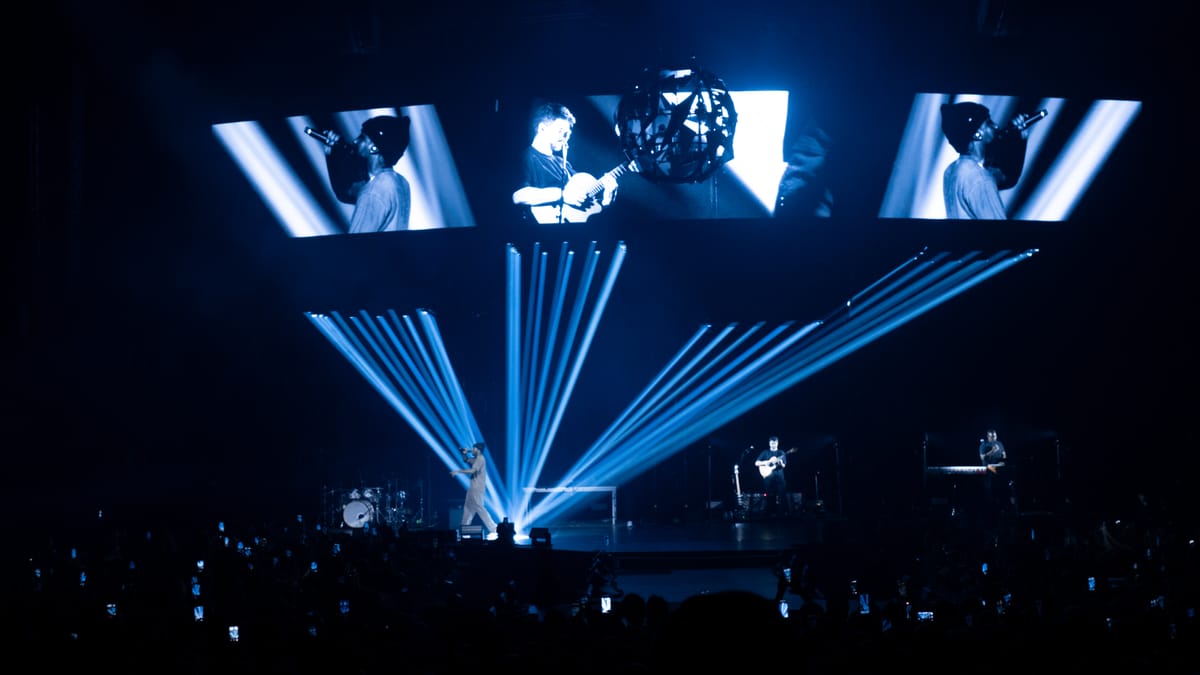
French rapper Tiakola has rapidly become one of the country’s most influential young artists, drawing millions of listeners with a melodic approach to rap that blends rhythm, emotion and cinematic production. When planning the visual identity for one of his recent tours, the creative team behind the show sought to build a stage environment that could evolve continuously throughout the performance.
At the centre of that design was the Naostage K SYSTEM, the world’s first and only beaconless performer tracking ecosystem that enabled lighting, video and automation elements to respond dynamically to the artist’s performance and the stage architecture around him.
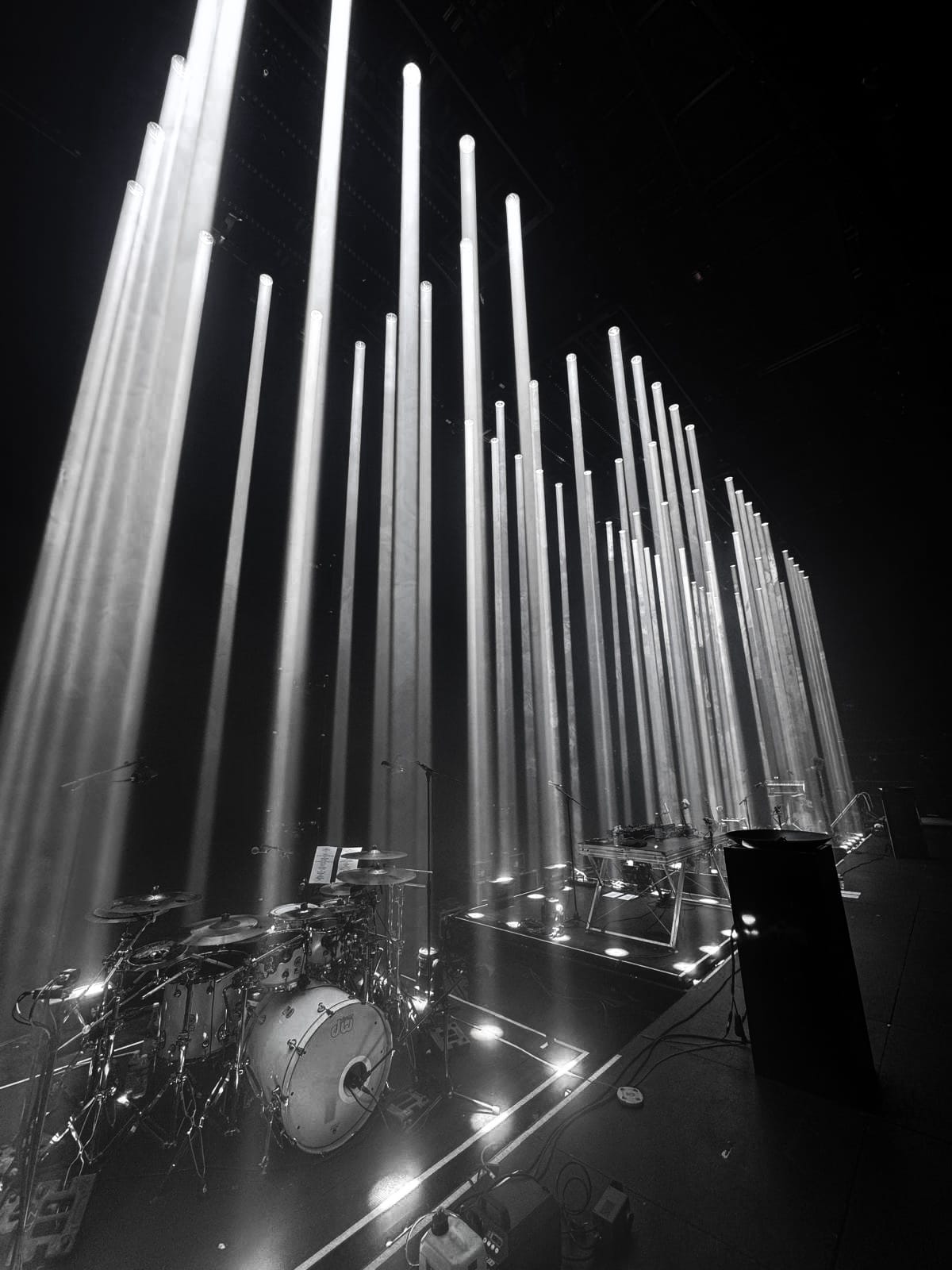
The scenography and lighting design for the production were led by Julien Peyrache and Michaёl Berzon of ALIEN le studio, who were brought into the project by Nonstop Productions. Early discussions with producers Morgan Antonutti and Marie-Sandrine Martin focused on creating a highly kinetic stage environment where the artist, musicians and scenographic elements could move freely throughout the performance.
The resulting design incorporated motorised musician lifts, suspended lighting pods and a large automated LED screen, alongside a custom mirror-clad sphere that served as the centrepiece of the show’s opening sequence. With so many moving elements interacting within the same performance space, the team required a powerful tracking platform capable of maintaining precise spatial awareness across the entire 8 x 22 metre main stage and 4 x 11 metre B-stage. They accomplished this using two KAPTA tracking sensors mounted on the overhead truss structure.
“We’d been following Naostage for some time, but everything really clicked when we saw the system demonstrated in the field at the Poupet Festival,” says Peyrache. “What immediately stood out was how flexible it was. You can shape the system to work with almost any type of fixture, which meant we could integrate it directly into the creative process.”
The Naostage K SYSTEM is built around three core components – the KAPTA tracking sensor, the KORE AI deep-trained processing server and the KRATOS control software. Together, these form a beaconless tracking platform that identifies performers directly on stage using several cameras and artificial intelligence rather than wearable transmitters or markers.
Mounted above the stage, KAPTA sensors use a combination of visible-light cameras, infrared cameras and thermal sensors to generate a real-time 3D representation of the performance space. Data from these cameras and sensors is sent to the KORE server, which processes the information using AI algorithms to determine each performer’s position, movement and speed in real time. The resulting spatial data is then distributed to external show systems through protocols such as PosiStageNet (PSN), OSC and Art-Net.
For the Tiakola tour, the tracking system managed five human targets alongside six machine trackers linked to the stage’s automated elements, resulting in a network of 23 PSN trackers controlling lighting and video behaviour across the show.
As the production evolved, the design team began to view the tracking system as something more than an automated followspot tool. “It quickly became the nerve centre of a massive 3D interactive ecosystem,” Peyrache says. “We weren’t just tracking performers. We were tracking the entire stage architecture.”
To coordinate the large amount of spatial data generated by both performers and moving set pieces, the production integrated the Carrot Industries PSN Toolbox into the workflow. Integrated into the setup by lighting operator and developer Jérémy Dufeux, the software acted as a central processing layer between Naostage, a Raynok automation system and the show’s lighting and video control platforms.
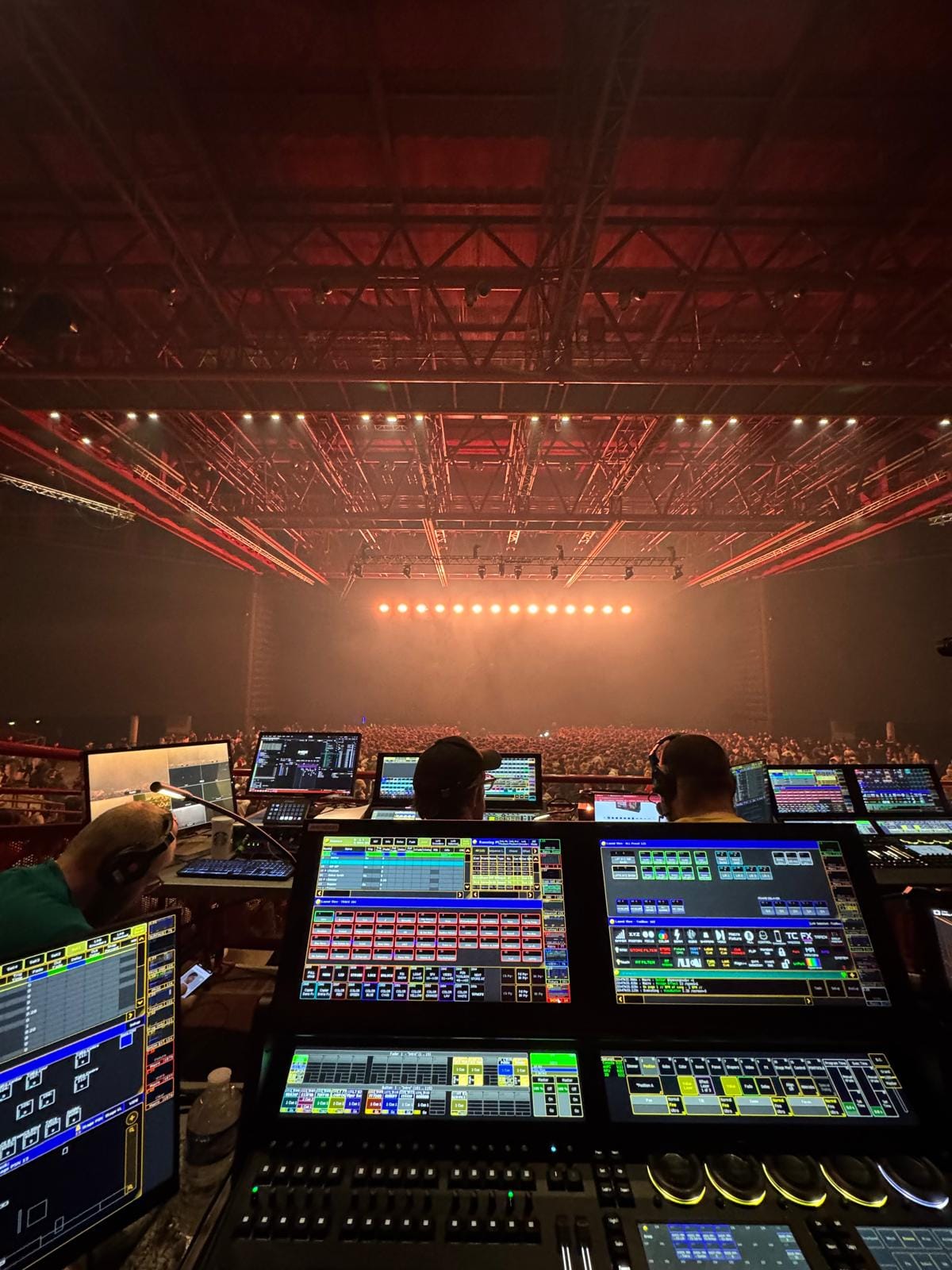
The PSN Toolbox collected tracking data from the Naostage system alongside positional information from Raynok, which controlled elements such as the LED screen, mirror sphere, musician lifts and overhead lighting pods. The software then merged and transformed these data streams before sending clean positional data to the grandMA3 lighting console and the SMODE media server.
Calibrating the system required precise alignment between the physical stage and its virtual representation within the lighting console. “To calibrate the space, we defined six reference points on the floor and entered their exact coordinates into the system,” explains Berzon. “That allowed the tracking environment to match the 3D space used by the lighting console, ensuring that everything was speaking the same spatial language.”
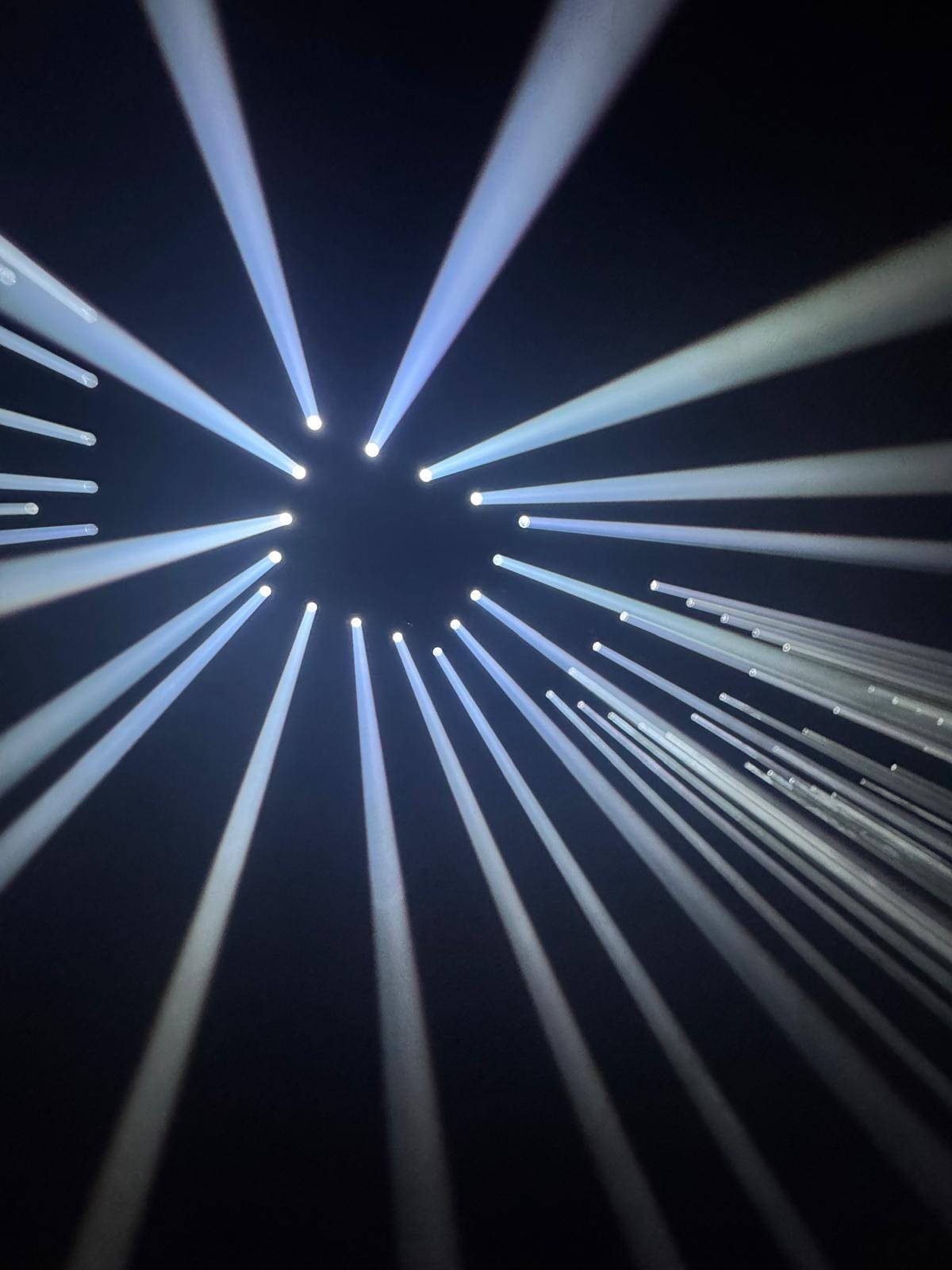
In total, more than 120 lighting fixtures were calibrated individually within the tracking environment. This represents a new record for the K SYSTEM, as it’s the largest number of lighting fixtures ever managed by the platform on a single production. These fixtures included 108 Starway Baracca 360 fixtures, alongside a large complement of Chauvet and Robe products distributed across the stage and moving pods.
The spatial tracking network also allowed the team to explore new creative approaches to lighting and video interaction. Integration with the SMODE media server enabled the creation of generative video elements that followed the performer across the stage.
“We programmed a virtual halo of light that moved in real time behind Tiakola,” Peyrache says. “As he moved left or right, the halo translated across the LED screen to stay perfectly aligned with his position, merging the physical and digital worlds.”
The production also drew on the expertise of a number of specialist teams. RCube served as technical director, with AIM Motion acting as technical provider. Construction was handled by Eddy May and Fer & Défaire, and automation was overseen by Mash. Media creation was the work of Les Vandales, with SMODE operation managed by Pixel Priority, alongside Romain Fior and Romain Delaplace. Lighting console operation was handled by Loris Illouz, and Naostage system operation by Corentin Courcoux.
For Peyrache, the success of the production ultimately came from the way complex technical systems could be harnessed in service of a clear artistic concept. “The real achievement was making the technology disappear,” he concludes. “We were managing a huge amount of data and tracking information in real time, but the audience never saw that complexity. What they experienced was a stage that felt alive, where light, movement and performance all responded to each other naturally.”
PHOTOS: ALIEN le studio
Naostage website - www.naostage.com/en